


One workshop, two levels:
to practice & to teach
Fascia
Form & Flow
Feel & release (General public)
Sequencing & adapting (Pros)
Friday and Saturday are open to everyone.
Sunday is a day of deepening
dedicated to therapists and healthcare professionals.
Choose your profile to discover your experience:
Hours
Friday: 6pm-9pm
Sat & Sun: 9:30 am to 5:30 pm - Lunch break 12:30-1:30 pm
Dates
- dates à venir Tout public
- dates à venir Pro
Yoga ReSource Montreal
Fragments Libres
141 Avenue du Mont-Royal E, Montreal, H2T 1N9
Immersive workshop - Fascia, Form and Fluidity
With Carina Raisman - B.Sc, Yogatherapist, E-RYT500, ANQ, RITMA
Fascia, Form and Fluidity - For everyone
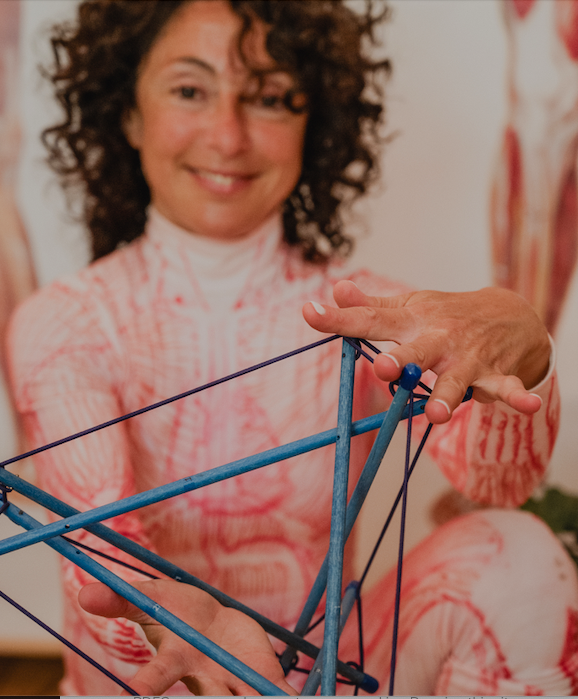
Two days to understand what’s really happening in your fascia when you move.
You’ll learn to practice mindfully, to hydrate and release the tissues
to restore fluidity and range of motion, and to reduce tension and inflammation.
-
You want to move with ease and regain fluidity (less stiffness in neck, back, hips, shoulders).
You often sit or stand for long periods and are looking for simple self-care to loosen up your body on a daily basis.
You practice (yoga or sport) and want to recover better, prevent compensation and reduce tension.
You want to understand, without jargon, the link between fascia ↔ breathing ↔ inflammation/pain.
You want short routines (massage balls, breath, micro-movements) to hydrate tissues and gain amplitude.
You're looking for a gentle yet effective way to relax and reconnect with your sensations.
-
Understand the role of fascia in overall health (movement, breathing, regulation).
Putting theory into practice: feeling form + fluidity in asanas, walking and everyday gestures.
Release & hydrate tissues: myofascial release using massage balls, breathing, micro-movements.
Experience Fascia Flow: a free-movement jam (with music) to integrate and feel in depth.
-
Tissue hydration: short routines, breathing, "sponge" movements.
Fluidity & mobility: more amplitude, less compensation.
Somatic reference points: listen, adjust, dose without hurting yourself.
Self-care: massage balls, body unwinding, micro-movements.
Stress regulation through breathing and body awareness.
Mini-routines to redo at home, in the office or before/after an activity.
Friday and Saturday are open to everyone!
Fascia, Form, and Fluidity - PRO
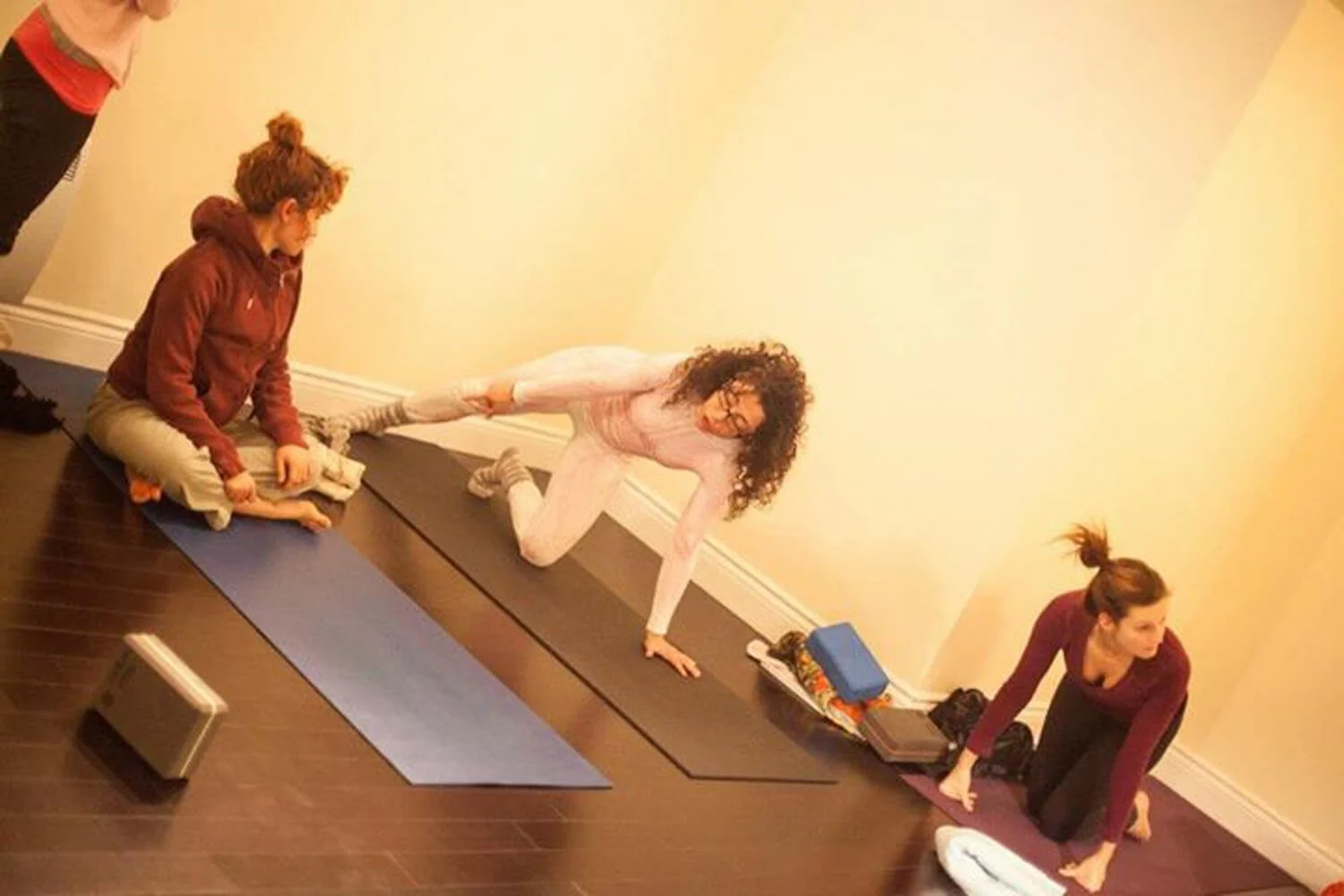
A third day devoted to translating these principles into effective therapeutic tools
—in groups or privately—with variations, corrections, and adapted cues.
-
You're a movement teacher or practitioner (yoga, masso, physio, osteo, kinesiology, somatics...) and want to update your knowledge of fascial tissues.
You'll want to integrate fascial work into group classes and private sessions (progressions, variations, cues).
You want to recognize frequent compensations and correct them without breaking the group's rhythm.
You're looking for a clear therapeutic sequencing framework (breathing, tissue hydration, tensegrity) that can be transferred directly into your work.
You accompany students/clients with persistent tension, hypo/hypermobility, high stress and want precise tools to regulate and release.
You want to refine your somatic language and develop states of consciousness conducive to fascial work.
-
In-depth theory: current fascial models, pain/inflammation, tensegrity.
Therapeutic sequencing: private & group, progressions, variations and safe dosing.
Corrections without breaking the rhythm: cues, somatic cues, choice of images.
Peer-to-peer mini-practicum: case studies, feedback, immediate integration.
Develop states of consciousness conducive to fascial work (attention, breathing, listening to tissues).
Advanced use of massage balls (zones, times, contraindications).
-
Therapeutic sequencing (group & private) focused on hydration, gliding, regulation.
Simple myofascial release protocols (tools, time, dosage, contraindications).
Tissue observation grid: glide, density, tone, sensitive areas, and more.
Cues & images to guide tissue states (attention, slowness, awareness).
Progressions by objective: pain, mobility, posture, breathing.
Typical scenarios: sedentary lifestyle, neck/shoulders, lower back, hips, sports recovery.
🔒 Sunday is only open to participants who attended the first two days.
PRACTICAL INFORMATION
👜 Matériel : tapis de yoga, bloc(s), sangle, bouteille d’eau, tenue confortable, cahier de notes.
AFTER REGISTRATION
You will receive :
Un courriel avec toutes les infos pratiques.
A reminder before the start of the workshop.
⚡I'm signing up
⚡I'm signing up
⚡ Places are limited to encourage personalized support.
Don't miss this opportunity to elevate your teaching and offer the best to your students.
✺ FAQ ✺
-
All ages: if you want to move with greater ease, understand inflammation/pain and learn simple self-care (breathing, massage balls, micro-movements).
Therapists & teachers: if you want to integrate fascial work into group classes and private lessons, with a clear sequencing framework.
-
General public (Fri-Sat): fascia basics, tissue hydration, myofascial release, Fascia Flow.
Pro (Sun.): in-depth theory, therapeutic sequencing, corrections, mini-practicum, simple protocols for private & group use.
-
No. Experience of movement (yoga, walking, sport) helps, but it's not compulsory. For the Pro Day, it's best to have already taught/practiced with clients.
-
Yes. We explain without jargon and offer concrete guidelines for safe practice.
-
Yes, with midfulness and adaptations. Write to us beforehand to let us know. This workshop is educational and does not replace medical advice; avoid painful postures or inappropriate deep pressure.
-
Acute inflammation, recent post-op, recent fracture/sprain, active skin disorders, pain not assessed: consult your healthcare professional and avoid local pressure. Gentle options may be suggested.
-
No. It's an educational workshop that encourages safe, conscious practice. It can complement a professional follow-up.
-
All ages: hydrates tissues, release tension (balls), breathe efficiently, regain fluidity & amplitude.
Pros: sequencing, clear cues, correct without breaking the rhythm of the class, simple myofascial release protocols.
-
Yes. If you have massage balls (therapeutic/lacrosse/tennis type), bring them along. We also have a few pairs available for loan - just let us know when you register if you don't have any.
👉 You can buy the model we use via our affiliate link: [Buy recommended balls].
By using this link, you support our work at no extra cost - thank you!Tip: diameter ~6-7 cm, medium density, smooth surface; alternatively, 2 tennis balls will do nicely.
-
Mat, 1-2 blocks (if you have them), strap, water bottle, comfortable clothes, notebook.
-
Yes, a certificate of participation (with the number of hours attended) is issued. For credits, it depends on your order/association: bring the attestation, and have the hours recognized according to their criteria.
-
No video recording. You receive a checklist and/or PDF resources summarizing the key points.
-
Refunds up to D-14 (except $200 administration fee). You can transfer your place to someone else if you can no longer come. Write to us for any adjustments.
-
Yes, write to us for an arrangement.
-
Alumni: loyalty rate for our graduates.
Member: Community Rates that supports continuing education.
Regular: open to all.
Become a member? Follow the link on the page or write to us - it's quick.
-
The workshop is conducted in French. Carina can adapt as needed (English questions welcome). Material written mainly in French.
-
Location and Google Maps are shown on the page. Parking nearby. Meals not included: bring your own lunch or take advantage of local options (info on site/before the event).
-
Do you need special adaptation (mobility, hearing, etc.)? Write to us so we can prepare the ground and suggest options.
-
Places are limited to preserve the quality of accompaniment (small group). Book early.
-
You'll receive a confirmation e-mail, practical information, a little preparation, then a reminder a few days before.
-
The Pros Day builds on the foundations of Part 1. If you already have a solid foundation in yoga anatomy/alignment, write to us to validate your direct access.
-
Yes. You leave with simple reference points, variations and a sequencing framework to integrate from the following week.